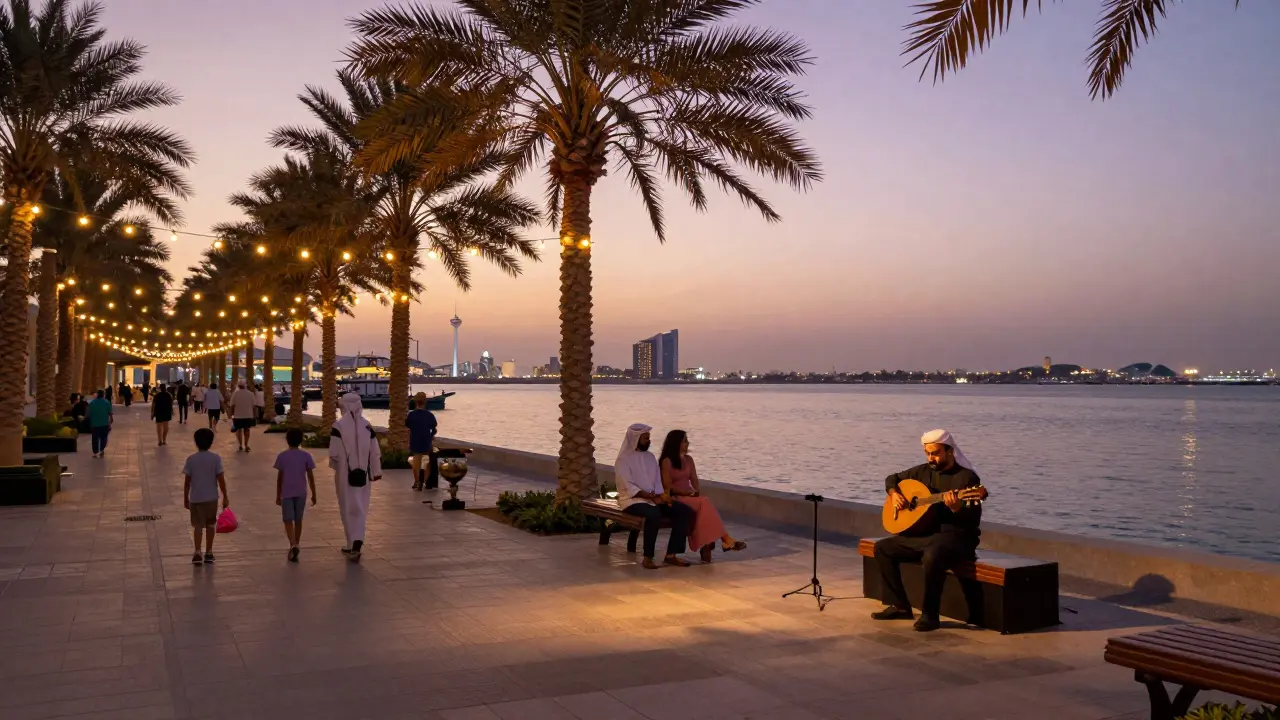
Abu Dhabi doesn’t sleep when the sun goes down-it hums. Not with the chaotic energy of Dubai’s party scene, but with something deeper: a quiet, confident rhythm shaped by tradition, music, and the warmth of shared moments. If you think nightlife here is just upscale bars and VIP lounges, you’re missing the soul of it.
The Rhythm of the City After Sunset
By 8 p.m., the Corniche starts to breathe differently. The heat of the day fades, and families stroll under string lights. Couples sit on benches near the marina, listening to live oud players from nearby cultural centers. This isn’t just a walk-it’s part of the rhythm. Abu Dhabi’s nightlife doesn’t shout. It invites.
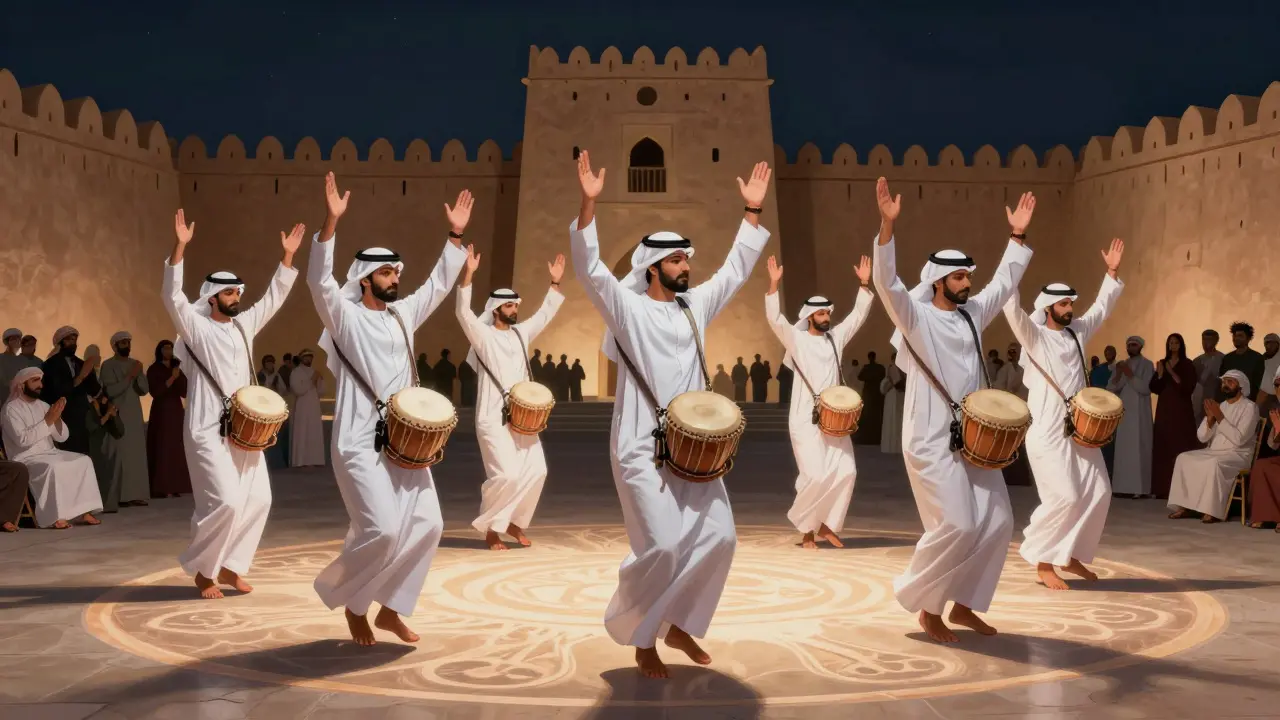
At the Abu Dhabi Nightlife scene, music isn’t background noise. It’s the heartbeat. You’ll find Emirati folk ensembles performing Yowla dance rhythms at Al Qasba’s open-air stages. These aren’t tourist shows. Locals come with their kids, clapping along, swaying to the beat of the tabl drum. The music carries stories-of desert caravans, sea voyages, and family reunions passed down for generations.
Dance That Tells a Story
When you see a group of men in white thobes moving in perfect unison, arms raised, feet stomping in time, you’re watching Ardha. It’s not a performance for cameras. It’s a living tradition. In places like the Cultural Foundation or during special events at Qasr Al Hosn, you’ll see young Emiratis learning these dances from elders. The movements are strong, deliberate-each step a tribute to heritage.
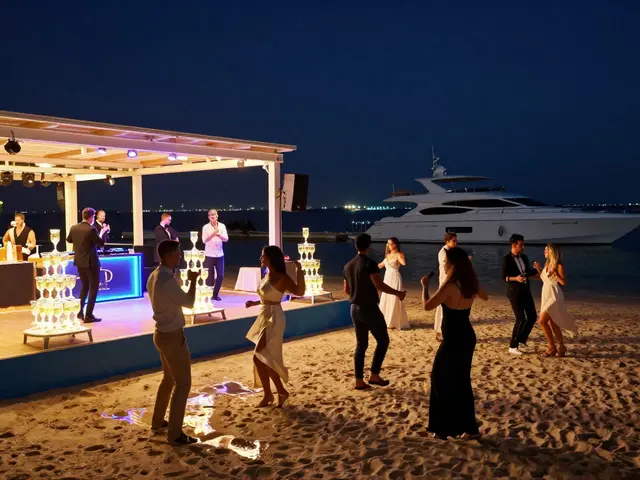
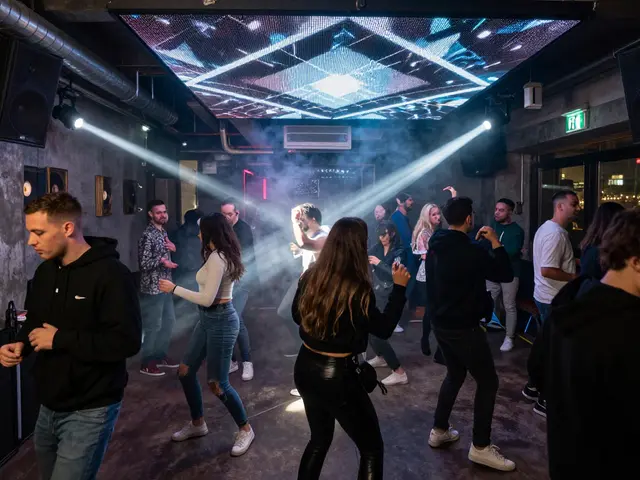
And then there’s the contrast: modern dance clubs like Zouk Abu Dhabi or 101 Nightclub. Here, DJs spin global hits, but the crowd doesn’t just dance-they connect. You’ll see expats and locals side by side, moving to the same beat. The music might be electronic, but the vibe? It’s still deeply Abu Dhabi. No wild crowds. No pushy bouncers. Just people enjoying the night without losing themselves in it.
Culture Isn’t Just on Display-It’s the Main Event
Forget the idea that culture is something you visit in a museum. In Abu Dhabi, it’s served with tea at 11 p.m. at the Louvre Abu Dhabi’s rooftop lounge. Or played live at the Emirates Palace’s Al Bateen lounge, where a solo violinist blends Arabic melodies with classical pieces. You’ll hear Khaliji pop, jazz fusion, and even Arabic hip-hop-all in one night.
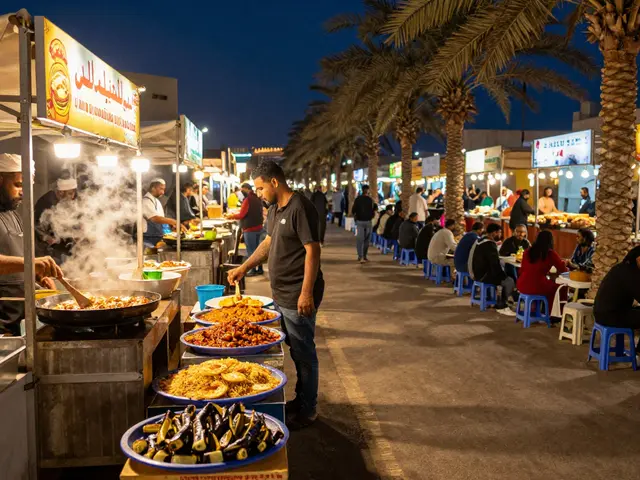
During Ramadan, the city transforms. Even after Iftar, the streets stay alive. Families gather at night markets like the one at Al Mina, where vendors sell luqaimat (sweet dumplings) and handwoven scarves. The air smells of saffron and cardamom. Children laugh as they ride camel carousels under lanterns. This isn’t nightlife as entertainment. It’s community.
Where to Experience It-Without the Crowds
You don’t need to book a table at a $200-per-person club to feel the pulse of Abu Dhabi after dark. Here’s where the locals go:
- Al Maryah Island’s Waterfront Walk-Free, open to all. Live acoustic sets every Friday, with views of the skyscrapers lit up like jewels.
- Al Diwaniya-A cultural hub in the old town where you can sip Arabic coffee while listening to poets recite verses in classical Arabic. No cover charge. No dress code.
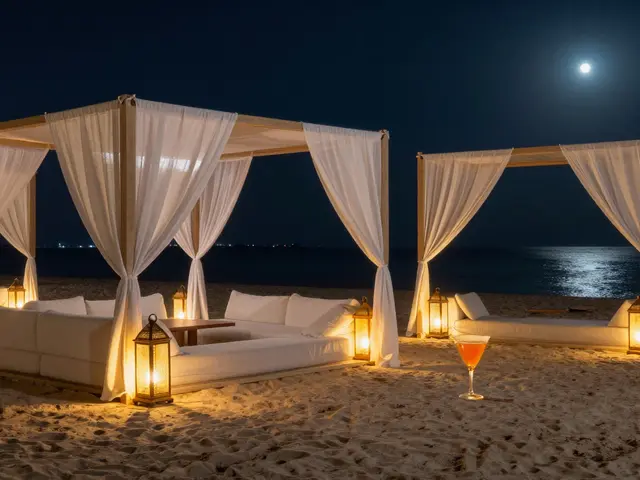
- The Beach Club at Yas Island-Not a club. Just a stretch of sand, a few shaded loungers, and a DJ playing Arabic remixes. Bring your own blanket. Stay until the stars come out.
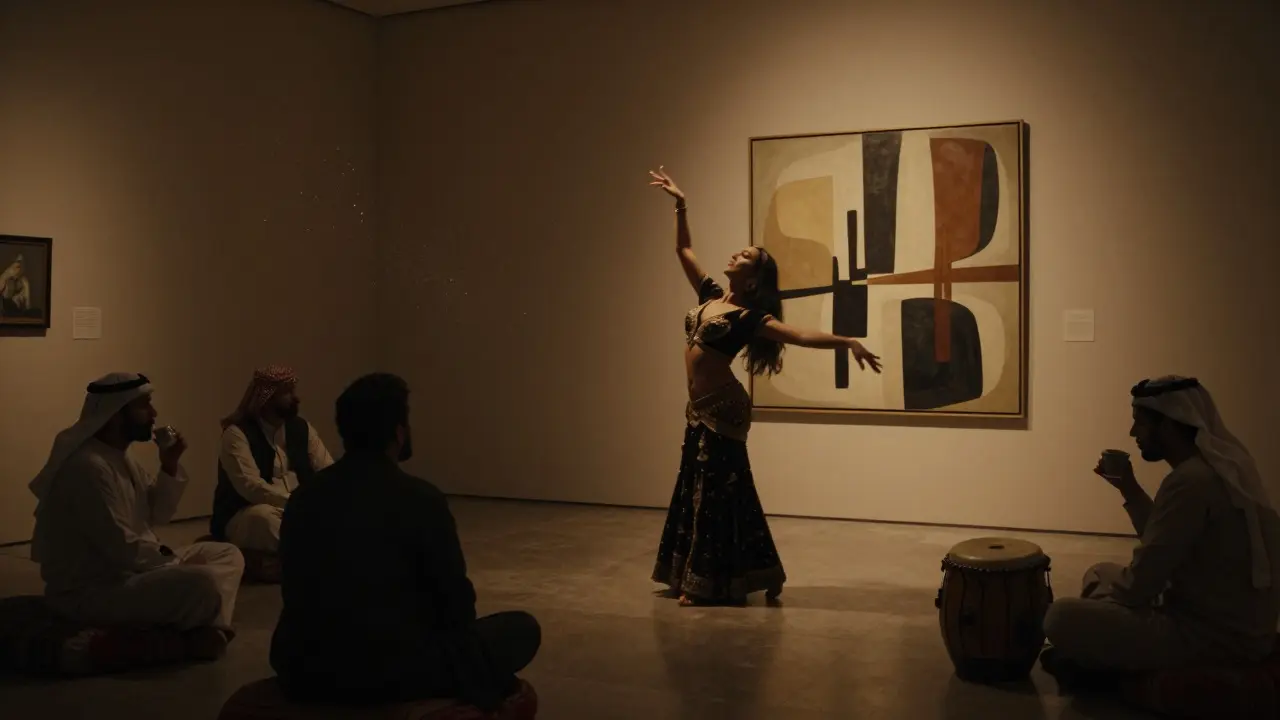
- Manarat Al Saadiyat-Art galleries that stay open late on Thursdays. Free entry. Often paired with live percussion or belly dance performances that feel intimate, not staged.
These spots don’t advertise on Instagram. You find them by asking a local. Or by wandering. That’s how Abu Dhabi’s nightlife works-it reveals itself slowly.
What Makes It Different From Other Cities
In Dubai, nightlife is about status. In Abu Dhabi, it’s about presence. There’s no flashing neon. No bottle service with inflated prices. No velvet ropes keeping people out. Instead, you get authenticity. A musician from Yemen playing the nay flute beside a French jazz pianist. A grandmother teaching a teenager how to clap the rhythm of a traditional khaleeji song. A group of friends sharing a single pot of gahwa while listening to a live band.
The rules here are simple: respect the space. Dress modestly unless you’re at a designated club. Don’t take photos of people without asking. And never assume the night ends at midnight-it often begins then.
Seasons Shape the Night
Winter (November to March) is when Abu Dhabi’s nightlife truly blooms. Temperatures drop to the low 20s. Outdoor events multiply. The Abu Dhabi Festival, held every February, brings world-class musicians to stages across the city-from the Grand Mosque courtyard to desert camps outside the city limits.
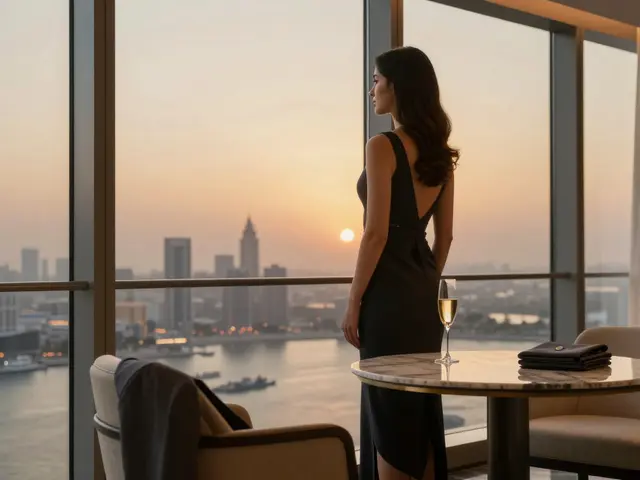
Summer? Quiet. But not dead. Air-conditioned venues like the Etihad Museum’s rooftop bar or the Jumeirah at Etihad Towers’ lounge become the new hubs. You’ll find fewer crowds, more conversation, and DJs who play deep Arabic house-music made for slow nights and long talks.
Final Thoughts: It’s Not About How Loud It Is
Abu Dhabi’s nightlife doesn’t need fireworks to be unforgettable. It thrives in the quiet moments: the clink of a glass of arak after a long day, the sound of a child learning to dance for the first time, the way the call to prayer echoes softly over a rooftop jazz set.
This isn’t a place to party hard. It’s a place to feel deeply. To listen. To be part of something that’s been here long before you arrived-and will keep going long after you leave.
Is Abu Dhabi nightlife safe for tourists?
Yes, Abu Dhabi is one of the safest cities in the world for tourists at night. Public areas are well-lit and patrolled. The police presence is visible but not intrusive. As long as you respect local customs-like dressing modestly and avoiding public displays of affection-you’ll have no issues. Most venues are accustomed to international visitors and welcome them warmly.
Can I drink alcohol in Abu Dhabi nightclubs?
Yes, but only in licensed venues. Most hotels, resorts, and designated clubs serve alcohol. You must be 21 or older to drink, and ID is always checked. Public drinking is illegal, so don’t bring alcohol to beaches or parks. Some places, like Al Maryah Island, have outdoor bars where you can sip a cocktail while watching the sunset-perfectly legal and very popular.
What’s the dress code for Abu Dhabi nightlife?
It depends on the place. For cultural venues, museums, or traditional lounges, cover your shoulders and knees. In upscale clubs or hotel bars, smart casual works-think collared shirts and nice jeans. No swimwear, flip-flops, or tank tops unless you’re at a beach club. When in doubt, err on the side of modesty. Locals appreciate the effort.
Are there family-friendly nightlife options in Abu Dhabi?
Absolutely. Many areas, especially Al Qasba and the Corniche, host evening events designed for families. You’ll find puppet shows, traditional storytelling, art workshops, and light shows projected on buildings. The Yas Waterworld night events in winter are popular with kids. Even the Louvre Abu Dhabi hosts late-night family tours with interactive activities. Abu Dhabi’s nightlife isn’t just for adults-it’s for everyone.
When is the best time to experience Abu Dhabi’s nightlife?
November through March is ideal. The weather is cool, and events are in full swing. February is especially rich, with the Abu Dhabi Festival bringing international artists to the city. Weekends (Thursday to Saturday) are liveliest, but even on weekdays, you’ll find quiet, meaningful experiences at cultural lounges and waterfront spots. Avoid July and August if you can-too hot for outdoor activities.
If you want to understand Abu Dhabi, don’t just see its landmarks. Stay out past midnight. Listen to the music. Watch the dancers. Let the city show you who it really is.


Write a comment